
Traveling with a baby can be challenging, especially when the weather is hot. Long car journeys, road trips, and even short drives can become uncomfortable for infants who are sensitive to heat. Unlike adults, babies have a harder time regulating their body temperature. A warm car seat, direct sunlight, poor air circulation, and prolonged sitting can quickly make a child sweaty and uncomfortable. This is where a Baby seat cooler can be useful.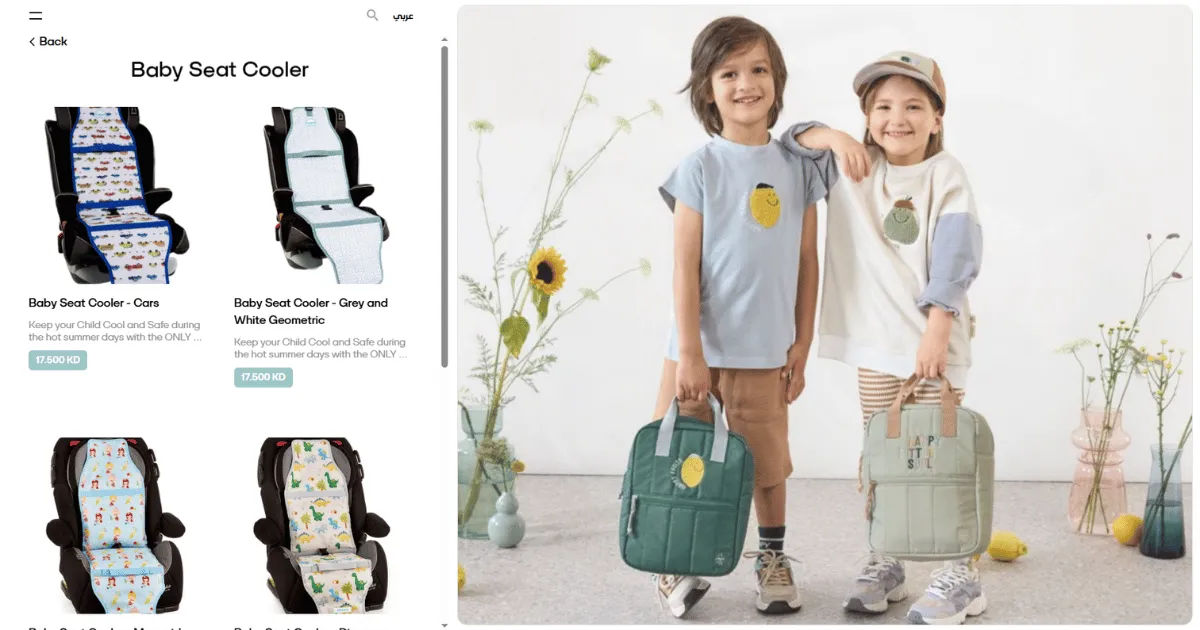
A Baby seat cooler is designed to help make a baby's seating area more comfortable during travel. Depending on the type, it may use breathable materials, cooling gel, water-based cooling technology, or specialized fabrics that help reduce heat buildup. Some products are designed to cool the seat itself before use, while others focus on improving airflow around the baby's body.
The main reason parents consider a Baby seat cooler is simple: comfort. When a baby is sitting in a hot car seat for a long period, they may become restless, sweaty, irritated, or unable to sleep. A cooler seating environment can make the journey easier for both the baby and the parent.
However, using a cooling product around a child requires careful attention to safety. A cooling accessory should never interfere with the proper installation or operation of a child safety seat. Parents should always follow the car seat manufacturer's instructions and make sure any accessory is compatible with the specific seat.
Understanding how these products work, when they are useful, and how to use them correctly can help parents make better decisions for comfortable and safe travel.
What Is a Baby Seat Cooler?
A Baby seat cooler is a product intended to reduce heat and improve comfort in or around a baby's seating area during travel. It is commonly considered for use during warm weather, particularly when a child spends extended periods in a car seat.
Different cooling products work in different ways. Some contain cooling gel that absorbs heat. Others use breathable mesh or moisture-wicking fabrics to reduce sweat. Some portable cooling systems use fans or airflow to help move warm air away from the child's body.
There are also products that are placed in a car seat before the baby is seated. These can help cool down a surface that has become hot after sitting in a parked vehicle. However, the product must be removed or used according to the manufacturer's safety instructions before the child is placed in the seat.
The term can cover several different types of cooling solutions. Therefore, parents should not assume that every product marketed as a Baby seat cooler is suitable for every car seat.
The most important consideration is compatibility. A cooling product should not change the position of the baby, loosen the harness, cover important safety components, or affect the way the car seat absorbs crash forces.
Why Do Babies Get So Hot During Travel?
Babies can become uncomfortable in vehicles for several reasons. The interior of a car can heat up quickly, especially when the vehicle has been parked in direct sunlight.
Car seats can also retain heat. Many child safety seats have thick padding and materials designed for protection and support. While these features are important, they can also reduce airflow around the baby's back and body.
A baby may remain in the same position for a long time during a journey. This means heat and moisture can build up between the child's body and the seat.
Clothing also plays a role. Parents may dress babies in layers for comfort or protection from air conditioning. However, too many layers can make a child warmer than necessary.
Sunlight is another factor. Even when the vehicle's air conditioner is operating, sunlight coming through a window can create uncomfortable hot spots.
For these reasons, parents often look for ways to improve the seating environment. A Baby seat cooler may help address some of these comfort problems, especially when combined with proper vehicle ventilation and appropriate clothing.
How Does a Baby Seat Cooler Help During Travel?
The exact benefits depend on the design of the product. Some cooling accessories focus on reducing heat, while others improve airflow or manage moisture.
A cooling gel product may absorb some heat from the surface. Breathable materials can allow air to circulate more freely. Moisture-wicking fabrics can help move sweat away from the baby's skin.
The goal is generally to reduce the feeling of heat and dampness that can develop during a long journey.
However, cooling products should not be considered a replacement for proper climate control. The vehicle's air conditioning system, ventilation, and sensible clothing choices remain important parts of keeping a baby comfortable.
Parents should also remember that a cooler surface does not necessarily mean the entire environment is safe from excessive heat. The temperature inside a vehicle should always be monitored carefully.
Improved Comfort on Long Road Trips
One of the biggest reasons parents use a Baby seat cooler is to improve comfort during longer journeys.
A road trip may involve several hours of sitting in a car seat. Adults can adjust their position, remove a jacket, or move to a cooler seat. Babies cannot do these things independently.
As a result, a baby can become uncomfortable without being able to explain what is wrong.
Heat can cause sweating and irritation. A child may become restless or cry more frequently. In some cases, the discomfort may make it difficult for the baby to sleep.
Improving airflow and reducing heat buildup can make the journey more pleasant.
This can be particularly helpful when traveling during summer or in regions with high temperatures. Parents may find that a more comfortable seating environment helps their baby remain calmer throughout the journey.
Of course, comfort should never come at the expense of safety. Any cooling solution should be used only when it does not compromise the proper function of the child restraint system.
Helps Reduce Sweating
Babies often sweat when they are exposed to warm conditions. The back of the head, neck, and back can become especially warm when a child is sitting against a padded surface.
Excessive sweating can make a baby feel uncomfortable. It can also leave clothing and the seat damp.
A Baby seat cooler made from breathable or moisture-managing materials may help reduce the buildup of heat and moisture.
This can be particularly useful during long journeys. When the baby's back remains cooler and drier, the child may feel more comfortable.
Parents should still check the baby regularly. A cooling product should not create a false sense of security. Babies can become overheated even when their skin does not feel extremely hot.
Regular checks are especially important during very warm weather.
Can Help Prevent Heat Buildup
Heat buildup is one of the main concerns when a child sits in a car seat during warm weather.
The combination of the child's body heat, the seat's padding, clothing, and the vehicle's temperature can create a warm environment.
A cooling accessory may help reduce heat accumulation around the child's body. Products that promote airflow can be useful because air movement may help carry away excess warmth.
Some cooling products are designed to be cooled before use. Others provide continuous airflow.
The right choice depends on the family's travel habits, the climate, and the type of vehicle.
Regardless of the product, parents should never leave a baby unattended inside a parked vehicle. A car can become dangerously hot very quickly, even when the outside temperature does not seem extreme.
Better Comfort During Summer Travel
Summer is one of the most common times when parents consider a Baby seat cooler.
Hot weather can make everyday travel more difficult. A short drive that feels comfortable to an adult may feel much warmer to a baby sitting in a padded safety seat.
The problem can be worse when the vehicle has been parked outside.
Before placing a baby in the car, parents should allow the vehicle to cool down. Running the air conditioner and improving ventilation can help reduce the interior temperature.
A cooling accessory can then provide additional comfort while traveling.
It is important to remember that the accessory is only one part of a broader approach. Safe summer travel also involves appropriate clothing, good ventilation, regular breaks, and careful observation of the child.
Useful for Babies Who Become Restless in Heat
Some babies are particularly sensitive to warm conditions. They may become restless, cry frequently, or have difficulty sleeping when they feel hot.
During a long drive, this can be stressful for everyone.
A Baby seat cooler may help create a more comfortable seating environment. If heat is contributing to the baby's discomfort, reducing heat and moisture may help the child settle.
However, parents should not automatically assume that crying is caused by temperature. Babies may cry because they are hungry, tired, uncomfortable, bored, or need a diaper change.
Parents should check all possible causes rather than relying on a cooling product alone.
May Support Better Sleep During Travel
Many babies sleep during car journeys, particularly when traveling for extended periods.
A comfortable temperature can help support restful sleep. Excessive warmth, sweating, or damp clothing may make it harder for a baby to remain comfortable.
A Baby seat cooler may help reduce some of these issues.
However, parents should remember that sleeping in a car seat is different from sleeping in a properly designed sleep environment. Car seats are primarily designed for transportation and protection during travel.
Parents should follow the manufacturer's guidance regarding the appropriate use of the car seat and should move the baby to a suitable sleep surface when the journey is over.
Why Breathability Matters
Breathability is an important feature to consider when choosing a cooling product.
Materials that allow air to move through them may reduce heat and moisture buildup. This can make the seating area feel more comfortable.
A breathable fabric may be especially useful in hot climates.
However, breathability should not be confused with safety. A material can feel cool and comfortable while still being unsuitable for use with a particular car seat.
Parents should always check whether the accessory has been approved or recommended for use with their specific child restraint.
The best cooling solution is one that improves comfort without changing the safety performance of the seat.
The Importance of Car Seat Safety
A Baby seat cooler should never interfere with the basic function of a child safety seat.
Car seats are carefully designed systems. The harness, padding, shell, and other components work together to protect the child during a collision.
Adding an aftermarket accessory can potentially change how the baby sits or how the harness fits.
For example, a thick cushion may push the baby forward. This could affect the harness position and potentially reduce the effectiveness of the restraint.
For this reason, parents should be cautious with any accessory placed between the child and the car seat.
The safest approach is to consult the car seat manufacturer before using an aftermarket cooling product.
If the manufacturer does not approve an accessory, parents should consider alternative ways to manage heat, such as cooling the vehicle before travel, using appropriate clothing, and improving airflow.
Never Put a Thick Layer Under the Baby
One of the most important safety considerations is avoiding unnecessary thickness beneath the child.
A thick cooling pad may appear harmless, but it can change the position of the baby in the seat.
This can affect how the harness fits around the child's body.
Parents should never assume that an accessory is safe simply because it is marketed for babies.
The product should be evaluated based on its compatibility with the specific child restraint.
If a cooling accessory requires the baby to sit on a thick additional layer, it is especially important to check the car seat manufacturer's instructions before use.
Check the Harness After Using Any Accessory
Whenever an accessory is used with a child safety seat, parents should check the harness carefully.
The harness should remain properly positioned and snug according to the manufacturer's instructions.
Parents should make sure the accessory has not pushed the baby into a different seating position.
If the harness no longer fits correctly, the accessory should not be used.
This is an important distinction. The purpose of a Baby seat cooler is to improve comfort, but the primary purpose of a child safety seat is protection.
Safety should always come first.
Cooling the Vehicle Before the Journey
One of the simplest ways to improve comfort is to cool the vehicle before placing the baby inside.
If the car has been parked in direct sunlight, the interior may be much hotter than the outside air.
Parents can start the vehicle and use the air conditioning to lower the temperature before the child enters.
Once the interior becomes comfortable, the baby can be placed into the correctly installed car seat.
This approach can work alongside a Baby seat cooler when the product is safe and compatible.
The key is to avoid placing a baby into an extremely hot vehicle and expecting a cooling accessory to solve the entire problem.
Choosing the Right Baby Seat Cooler
Parents should consider several factors when selecting a Baby seat cooler.
The first factor is compatibility.
The product should be suitable for the child's specific car seat. If the manufacturer does not recommend aftermarket accessories, parents should be cautious.
The second factor is material.
Breathable fabrics may be helpful in warm weather. Materials that manage moisture can also improve comfort.
The third factor is ease of cleaning.
Babies can sweat, spill drinks, and have diaper accidents. A cooling product that is difficult to clean may become inconvenient over time.
The fourth factor is durability.
A product used frequently during travel should be able to withstand regular use and cleaning.
Parents should also consider portability. Families who travel frequently may prefer a lightweight product that is easy to carry and store.
Most importantly, parents should avoid choosing a product based solely on its cooling claims. Safety, compatibility, and quality should come first.
What Features Should Parents Look For?
A good cooling product should be practical as well as comfortable.
Breathable materials are often useful because they can improve airflow.
Moisture management is another helpful feature. Materials that reduce sweat buildup may be more comfortable during long journeys.
Easy cleaning is also important.
Parents may also want to consider products that are lightweight and easy to transport.
However, the most important feature is compatibility with the child safety seat.
A cooling accessory that feels comfortable but interferes with harness performance is not a good choice.
Parents should always prioritize products that can be used without changing the safety setup.
How to Use a Baby Seat Cooler Correctly
Using a Baby seat cooler correctly requires more than simply placing it in the car seat.
First, parents should read the product instructions.
Next, they should check the child restraint manufacturer's recommendations.
The cooling product should not interfere with the harness, buckle, or other safety components.
Parents should also monitor the baby's temperature during travel.
If the baby appears unusually hot, sweaty, weak, sleepy, flushed, or uncomfortable, the journey should be paused when it is safe to do so.
The vehicle should be kept at a comfortable temperature, and the baby should be checked regularly.
Parents should never depend entirely on a cooling accessory to manage heat.
Take Breaks During Long Journeys
Long trips should include appropriate breaks.
Babies should not remain in a car seat for unnecessarily long periods without interruption.
During a safe stop, parents can take the baby out of the car seat, allow movement, offer feeding if needed, and check clothing and comfort.
Breaks also provide an opportunity to check whether the baby is sweating or becoming too warm.
A Baby seat cooler may help with comfort during the journey, but regular breaks remain important.
Planning rest stops in advance can make long-distance travel easier.
Dress the Baby for the Weather
Clothing can have a major impact on how comfortable a baby feels during travel.
In hot weather, lightweight and breathable clothing may be more suitable than heavy layers.
Parents should avoid overdressing a baby simply because the car has air conditioning.
At the same time, direct exposure to cold air should also be avoided.
The goal is to maintain a comfortable environment without creating extreme temperature changes.
A Baby seat cooler can support comfort, but appropriate clothing remains one of the simplest ways to manage temperature.
Keep Direct Sunlight Away
Direct sunlight can make a baby feel hot even when the overall vehicle temperature is comfortable.
Parents may use appropriate window shades to reduce sunlight entering the vehicle.
However, window coverings should not block the driver's visibility or create unsafe conditions.
The goal is to reduce direct exposure while maintaining a safe driving environment.
Combining shade, air conditioning, appropriate clothing, and a suitable cooling accessory can create a more comfortable travel environment.
Common Mistakes Parents Should Avoid
One common mistake is assuming that every cooling accessory is automatically safe for babies.
Marketing claims should not replace safety guidance.
Another mistake is using a thick cushion beneath the child without checking compatibility.
Parents may also forget to check the baby's temperature because the vehicle feels comfortable to them.
Adults and babies do not always experience heat in the same way.
Another mistake is leaving a child unattended in a parked vehicle.
No cooling accessory can make an unattended parked car a safe environment for a baby.
Parents should also avoid placing ice packs directly against a baby's skin. Extremely cold materials can cause discomfort or skin injury.
The purpose of a Baby seat cooler should be to improve comfort safely, not to create extreme cold.
When Should You Consider Using One?
A Baby seat cooler may be worth considering if your family regularly travels in hot weather.
It may also be useful for families who take long road trips or spend significant time in the car.
Parents whose babies become particularly uncomfortable in warm conditions may also find cooling solutions helpful.
However, the need depends on the individual situation.
If the vehicle has effective climate control and the baby remains comfortable, an additional cooling product may not be necessary.
The best decision is one based on the baby's comfort, the climate, travel habits, and car seat safety requirements.
Are Baby Seat Coolers Necessary?
For most families, a cooling accessory is not an absolute necessity.
It is better viewed as a comfort product rather than a basic safety requirement.
The most important factors for safe travel are a properly installed child safety seat, correct harness use, appropriate clothing, comfortable vehicle temperature, and regular monitoring.
A Baby seat cooler may provide additional comfort in hot conditions, but it cannot replace these fundamentals.
Parents should therefore think of cooling products as one possible tool among many.
If a cooling accessory is used, it should be selected carefully and used according to both product and car seat instructions.
Benefits of Using a Baby Seat Cooler During Travel
There are several potential benefits of using a Baby seat cooler when traveling.
It may help reduce heat buildup around the baby's back.
It can potentially improve comfort during long car journeys.
Breathable materials may help reduce sweating.
Moisture management can help keep the seating area feeling drier.
A cooler seating environment may help some babies remain calmer during travel.
The product may also be useful during summer road trips when vehicle interiors become warm quickly.
However, these benefits depend on the product design and proper use.
Parents should not expect every cooling accessory to provide the same results.
The Role of Parents in Managing Heat
Technology and accessories can be useful, but parents remain the most important part of keeping a baby comfortable.
Parents should observe the baby throughout the journey.
Look for signs of discomfort.
Check whether the baby is sweating excessively.
Pay attention to unusual tiredness or changes in behavior.
Keep the vehicle at a reasonable temperature.
Use appropriate clothing.
Take breaks during longer journeys.
These simple steps can often make a significant difference.
A Baby seat cooler can complement these practices, but it should never be treated as the only solution.
Conclusion
Traveling with a baby requires careful planning, especially during warm weather. Babies can become uncomfortable quickly because they have limited ability to regulate their body temperature and cannot adjust their seating position independently.
A Baby seat cooler may help improve comfort by reducing heat buildup, supporting airflow, managing moisture, or providing a cooler seating environment. For families who regularly travel in hot climates or take long road trips, this can be a useful addition to their travel routine.
However, the most important consideration is always safety. A cooling accessory should never interfere with the proper operation of a child safety seat. Parents should check manufacturer recommendations, avoid unapproved thick padding, and make sure the harness remains correctly positioned and securely fitted.
It is also important to remember that cooling accessories are only one part of a comfortable travel strategy. Cooling the vehicle before the journey, dressing the baby appropriately, reducing direct sunlight, maintaining comfortable air conditioning, and taking regular breaks can all contribute to a better experience.
Parents should also monitor their baby throughout the trip. If a child appears unusually hot or uncomfortable, the situation should be addressed promptly rather than relying solely on a cooling product.
Ultimately, the value of a Baby seat cooler comes from its ability to support comfort when used correctly. It can make warm-weather travel more pleasant for some babies and reduce the discomfort associated with sweating and heat buildup. However, it should always be selected with safety and compatibility in mind.
The best approach is to combine a suitable cooling solution with responsible travel habits. When parents prioritize correct car seat installation, proper harness use, temperature management, regular observation, and sensible clothing, they can create a safer and more comfortable travel environment for their baby.
For families who spend a lot of time on the road, even small improvements in comfort can make a meaningful difference. A carefully chosen Baby seat cooler can be one part of that solution, helping parents and babies enjoy smoother journeys while keeping the focus where it belongs: on safety, comfort, and well-being.